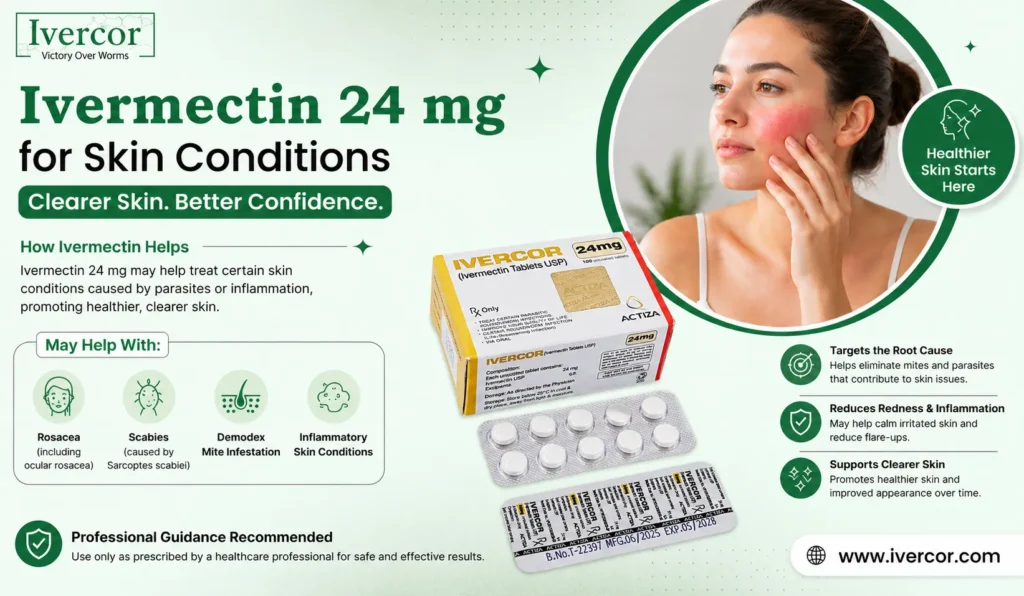
Ivermectin 24 mg for Skin Conditions
Introduction to Ivermectin 24 mg for Skin Conditions
Ivermectin 24 mg has gained significant attention as an effective treatment for various skin conditions. Originally developed as an anti-parasitic medication, ivermectin’s unique properties extend beyond its traditional use, offering promising results in dermatology. This article explores the benefits, uses, and safety of Ivermectin 24 mg as a skin treatment, helping patients and healthcare providers understand its potential as a therapeutic option.
What is Ivermectin?
Ivermectin is a medication primarily known for its ability to treat parasitic infections such as river blindness and scabies. Its anti-inflammatory and anti-parasitic effects make it suitable for addressing certain skin disorders caused by parasitic infestations and inflammatory conditions.
Ivermectin Dosage and Forms
Ivermectin is available in various forms, including oral tablets, topical creams, and lotions. The 24 mg oral dose is typically prescribed for systemic infections but can also be a part of treatment regimens for some skin diseases under professional guidance. Topical ivermectin, often used in 1% cream or lotion forms, is more commonly recommended for directly treating skin problems.
Common Skin Conditions Treated with Ivermectin
The unique properties of ivermectin make it effective in treating several dermatological conditions, including:
- Rosacea: Ivermectin cream reduces inflammation and kills Demodex mites believed to exacerbate rosacea symptoms.
- Scabies: Ivermectin tablets or topical formulations eradicate the mites responsible for this contagious skin condition.
- Demodicosis: Caused by Demodex mite overgrowth, ivermectin helps control the infestation and improve skin health.
- Other Parasitic Infections: Ivermectin treats other parasitic skin infections by targeting the parasites directly.
How Does Ivermectin Work for Skin Treatment?
Ivermectin acts by binding to glutamate-gated chloride channels in nerve and muscle cells of parasites, causing paralysis and death of these organisms. Its anti-inflammatory properties also help reduce redness, swelling, and irritation associated with several skin conditions, thereby improving overall skin appearance.
Oral vs. Topical Ivermectin for Skin
While oral ivermectin 24 mg is effective for systemic parasitic infections, topical ivermectin products are preferred for targeting skin-specific concerns. The topical form minimizes systemic exposure and potential side effects, making it a safer option for chronic skin conditions like rosacea.
Benefits of Using Ivermectin 24 mg for Skin Conditions
- Effective Parasite Eradication: Both topical and oral ivermectin effectively eliminate parasites contributing to skin diseases.
- Anti-inflammatory Effects: Ivermectin reduces skin inflammation, helping with symptoms like redness and itching.
- Convenience: Oral ivermectin 24 mg offers a simple dosing regimen, sometimes as a single dose or multiple doses spaced apart.
- Improves Skin Appearance: Regular treatment can lead to clearer, healthier, and more comfortable skin.
- Minimal Side Effects: When used correctly, ivermectin generally shows a good safety profile.
Precautions and Side Effects
Although ivermectin is generally safe, it is essential to use it under medical supervision, especially the 24 mg oral doses. Common side effects include:
- Mild skin irritation with topical use
- Headache
- Dizziness
- Nausea
- Fatigue
More severe reactions are rare but require immediate medical attention. Patients should disclose their full medical history, including any allergies, pregnancy status, or existing medical conditions before starting treatment.
How to Use Ivermectin for Skin Treatment
Dosage Guidelines
The exact dosage of ivermectin 24 mg depends on the specific skin condition being treated and patient factors like weight and overall health. For scabies, doctors may prescribe a single dose or two doses a week apart. For dermatological use such as rosacea, topical ivermectin cream is typically applied once daily.
Application Tips for Topical Ivermectin
- Wash and dry the affected skin area before applying.
- Use a thin layer over the affected area once daily or as directed by the healthcare provider.
- Avoid contact with eyes and mucous membranes.
- Continue treatment for the full prescribed duration even if symptoms improve.
Frequently Asked Questions (FAQ)
Is ivermectin safe for all skin types?
Generally, ivermectin is safe for most skin types, but it is essential to consult a healthcare provider to confirm its suitability for your skin condition and type.
Can I use ivermectin 24 mg to treat acne?
Ivermectin is not typically prescribed for acne unless there is a parasitic component involved, such as Demodex mite infestation. Always consult a dermatologist before use.
How long does it take for ivermectin to show results?
Improvement timelines vary by condition, but many patients notice a reduction in symptoms within 2 to 4 weeks of treatment.
Are there any drug interactions with ivermectin?
Ivermectin can interact with certain medications. Inform your doctor about all medicines you take, including over-the-counter drugs and supplements.
Can ivermectin be used during pregnancy?
Ivermectin is generally not recommended during pregnancy unless deemed necessary by a doctor due to insufficient safety data.
Conclusion
Ivermectin 24 mg serves as an effective treatment for several challenging skin conditions, particularly those linked to parasitic infections and inflammation. Whether used orally or topically, ivermectin skin treatment offers a promising solution to improve skin health and quality of life. Always consult with a healthcare professional before starting ivermectin therapy to ensure safety and efficacy tailored to your individual needs.