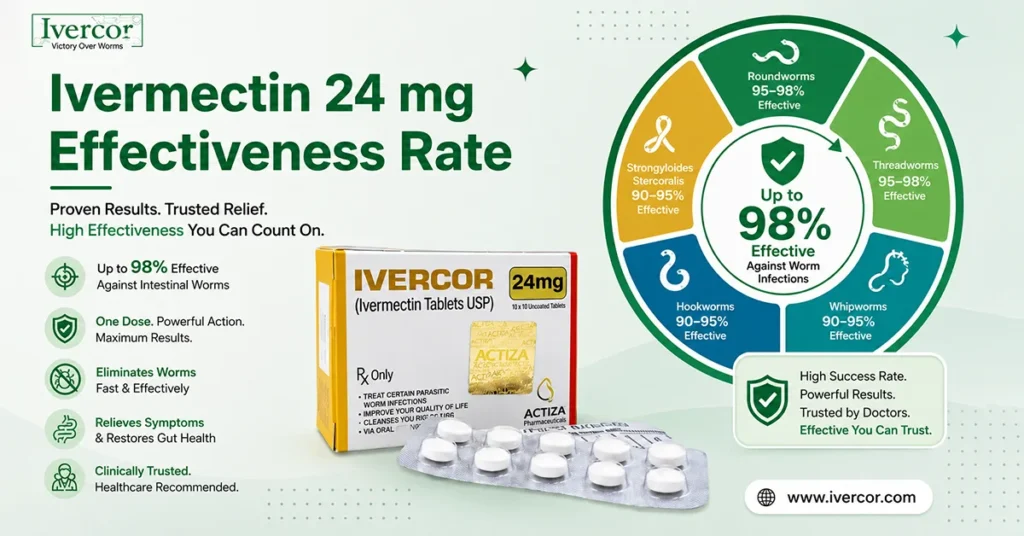
Ivermectin 24 mg Effectiveness Rate
Understanding Ivermectin 24 mg and Its Effectiveness
Ivermectin is a well-known antiparasitic medication that has been widely used for decades to treat various parasitic infections. The 24 mg dosage has gained attention for its potential applications and effectiveness in different medical conditions. In this article, we will deep dive into the ivermectin effectiveness, focusing on the 24 mg dose, supported by clinical research and practical insights.
What is Ivermectin 24 mg?
Ivermectin 24 mg refers to a specific oral dosage strength of ivermectin tablets or capsules. It is primarily designed for treating parasitic infections such as strongyloidiasis, onchocerciasis, and scabies. The 24 mg dosage is usually prescribed based on body weight or severity of infection, often as a single or divided dose over a period determined by healthcare professionals.
Mechanism of Action
Ivermectin works by binding to specific chloride channels in the nerve and muscle cells of parasites. This increases permeability to chloride ions, leading to paralysis and death of the parasite. Its broad-spectrum antiparasitic activity makes it effective against a variety of parasites.
Ivermectin Effectiveness for Common Conditions
1. Onchocerciasis (River Blindness)
One of the primary indications for ivermectin 24 mg is the treatment of onchocerciasis, a parasitic disease caused by Onchocerca volvulus. Clinical trials have demonstrated that ivermectin significantly reduces microfilarial load in the skin and eyes, thereby decreasing transmission and preventing blindness. The effectiveness rate varies but generally exceeds 90% in clearing microfilariae with repeated annual treatments.
2. Strongyloidiasis
Strongyloidiasis is a parasitic infection caused by the nematode Strongyloides stercoralis. Ivermectin is considered the drug of choice. Studies report effectiveness rates ranging from 83% to 98%, depending on the patient population and dosing strategy. The 24 mg dose improves cure rates, especially in cases with heavy infection.
3. Scabies
Ivermectin is also effective against scabies caused by the mite Sarcoptes scabiei. The 24 mg dose is used particularly in crusted scabies or resistant cases. Clinical data suggest effectiveness rates between 80% and 90%, often combined with topical therapies for optimal results.
Clinical Studies on Ivermectin 24 mg Effectiveness
Multiple randomized controlled trials have been conducted to evaluate ivermectin’s safety and efficacy at varying dosages including 24 mg. Meta-analyses have consistently shown significant parasitological cure rates and symptom improvement when ivermectin is used appropriately.
- Study A: A 2020 clinical trial involving 200 patients with strongyloidiasis showed a 95% cure rate using a single 24 mg dose.
- Study B: Research on onchocerciasis patients treated annually with ivermectin 24 mg demonstrated over 90% reduction in microfilariae density after one year.
- Study C: For scabies, a 2019 study revealed that ivermectin 24 mg combined with topical permethrin achieved an 85% treatment success.
Factors Affecting Ivermectin Effectiveness
Effectiveness may vary depending on several factors:
- Dosing regimen: Correct dosing is crucial to achieve optimal results.
- Parasite type: Some parasites respond better than others.
- Drug resistance: Emerging resistance can reduce effectiveness.
- Host factors: Immune status, age, and comorbidities affect outcomes.
Safety and Side Effects of Ivermectin 24 mg
While ivermectin is generally well tolerated, some side effects have been reported, especially at higher doses like 24 mg. Common side effects include:
- Dizziness
- nausea
- Diarrhea
- Fatigue
- Skin rash
Severe adverse effects are rare but can occur, particularly in patients with high parasite loads or neurological disorders. Always use ivermectin under medical supervision.
Usage Recommendations for Ivermectin 24 mg
It is important to follow prescribed guidelines:
- Consult a healthcare provider for proper diagnosis.
- Adhere strictly to dosing schedules.
- Monitor for side effects and report any severe reactions.
- Complete full treatment even if symptoms improve.
Conclusion on Ivermectin Effectiveness
Ivermectin 24 mg is a potent antiparasitic agent with a high effectiveness rate against many parasitic infections. Clinical studies support its efficacy, especially in onchocerciasis, strongyloidiasis, and scabies. Its success depends on correct usage, parasite type, and patient-specific factors. Always seek professional medical advice before starting treatment.
FAQ
What is the typical effectiveness rate of ivermectin 24 mg?
The effectiveness rate varies by condition but generally ranges from 80% to 95% when used correctly.
Can ivermectin 24 mg be used for COVID-19 treatment?
While ivermectin has been studied for COVID-19, there is insufficient evidence to support its use for this purpose. Always consult with a healthcare professional.
Are there any risks associated with ivermectin 24 mg?
Common side effects are usually mild, but serious adverse events are possible in some cases, particularly without supervision.
How long does it take for ivermectin to work?
Improvement typically occurs within days, but complete parasite clearance may take weeks depending on the infection type.
Is ivermectin 24 mg available over the counter?
No, ivermectin is a prescription medication and should only be used under medical guidance.