Ivermectin 24 mg Dosage for Adults
Introduction to Ivermectin
Ivermectin is a widely recognized medication primarily used to treat various parasitic infections in humans and animals. It belongs to the class of drugs known as anti-parasitic agents and has shown tremendous efficacy against several parasitic worms and external parasites.
While ivermectin is commonly prescribed in varying strengths and dosages, a frequent inquiry among adults is regarding the ivermectin 24 mg dosage. This comprehensive guide will delve into the correct dosing for adults, safety considerations, and other vital information associated with ivermectin use.
What is Ivermectin Used For?
Ivermectin is FDA-approved to treat conditions such as:
- Onchocerciasis (river blindness)
- Strongyloidiasis (intestinal threadworm)
- Scabies
- Head lice infestations
- Other parasitic infections as determined by a healthcare provider
Additionally, during the COVID-19 pandemic, ivermectin attracted attention, but its use for viral infections is not FDA-approved and remains controversial.
Understanding Ivermectin Adult Dosage
Accurately dosing ivermectin is critical for ensuring efficacy and minimizing adverse effects. The dosage depends on the type of infection, patient weight, and the formulation of ivermectin prescribed.
Standard Ivermectin Dosage for Adults
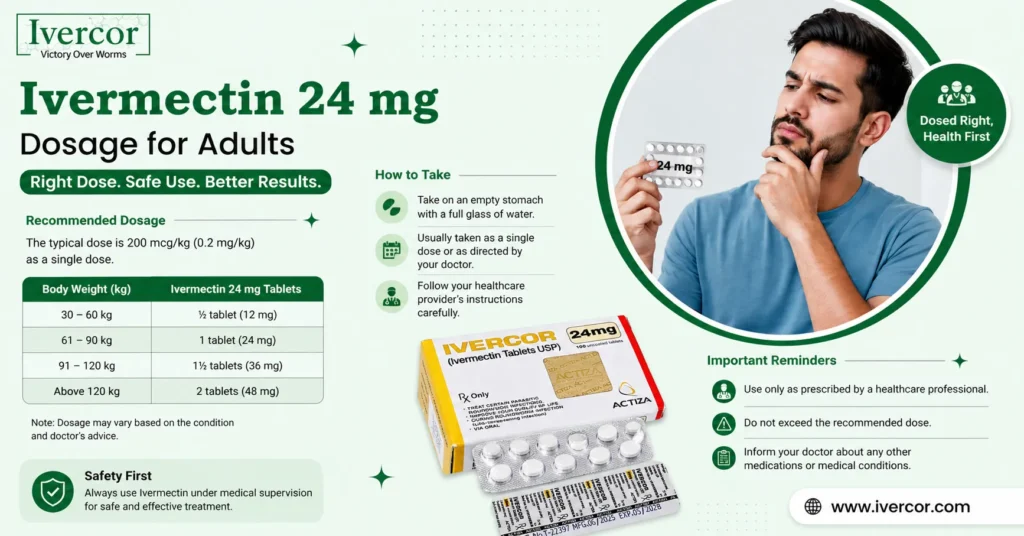
The usual dosage for ivermectin in adults is calculated based on body weight. The recommended dose is 150 to 200 micrograms per kilogram (mcg/kg) of body weight, given as a single oral dose in most cases.
For example, an adult weighing 70 kg (154 lbs) typically receives between 10.5 mg and 14 mg in a single dose. Because ivermectin tablets often come in strengths like 3 mg, 6 mg, or sometimes 24 mg, the exact number of tablets depends on the prescribed dosage.
The Role of Ivermectin 24 mg Tablets
Ivermectin 24 mg tablets are designed to deliver a higher dose in fewer tablets, which may be beneficial for certain treatments requiring larger doses or for ease of administration. However, these larger dosage tablets must be taken under strict medical guidance.
Determining When 24 mg Dosage is Appropriate
A 24 mg tablet may be used if the calculated dose based on your weight requires this amount or if a healthcare provider deems it necessary for the treatment plan. For instance, a person weighing around 120 kg (264 lbs) might need a dose close to 24 mg based on standard dosing calculations (200 mcg/kg × 120 kg = 24 mg).
Important: Never self-medicate or adjust the dose without consulting a healthcare professional.
How to Take Ivermectin Safely
Ivermectin is typically taken orally with water on an empty stomach, 1 hour before or 2 hours after a meal. Adhering to administration instructions provided by your healthcare provider or pharmacist is crucial.
Precautions and Contraindications
- Pregnancy and breastfeeding: Safety data is limited, so consult your doctor.
- Allergic reactions: Avoid use if you have a history of allergy to ivermectin or related drugs.
- Liver or kidney issues: Dose adjustments may be necessary.
- Concurrent medications: Inform your healthcare provider about other drugs to avoid interactions.
Side Effects of Ivermectin
While ivermectin is generally well-tolerated, side effects can occur. Common side effects include:
- Dizziness or lightheadedness
- Fatigue
- Gastrointestinal discomfort such as nausea, diarrhea, or abdominal pain
- Skin rash or itching
If you experience severe symptoms such as difficulty breathing, swelling of the face or throat, or severe rash, seek emergency medical attention immediately.
Frequently Asked Questions (FAQ)
1. Is 24 mg the standard dose for all adults taking ivermectin?
No, the 24 mg dose is not standard for everyone. Dosage is based on body weight, and many adults will require less. The 24 mg tablet helps accommodate higher doses when necessary.
2. Can I take ivermectin without a prescription?
No. Ivermectin should only be taken under medical supervision to ensure correct dosing and to monitor for side effects.
3. How often can ivermectin 24 mg be taken?
The frequency depends on the condition treated. For many parasitic infections, ivermectin is given as a single dose or repeated after a few weeks. Follow your healthcare provider’s instructions.
4. Is it safe to split the 24 mg tablet if a lower dose is needed?
Only split tablets if the manufacturer indicates it is safe and if advised by your healthcare provider.
5. Can ivermectin be taken with food?
It is generally advised to take ivermectin on an empty stomach for best absorption but follow the instructions provided by your provider.
Conclusion
Ivermectin remains an essential medication for treating parasitic infections effectively. Dosage for adults, including the use of Ivermectin 24 mg tablets, must be calculated carefully based on body weight and medical condition. Always follow your healthcare provider’s directions to ensure safe and effective treatment while minimizing risks of side effects.
If you have questions about ivermectin adult dosage or whether ivermectin 24 mg tablets are appropriate for you, consult your healthcare provider for personalized advice.