Parasitic Infections After Travel: What to Ask Your Doctor

A trip to a tropical or subtropical region usually ends with nothing worse than a suitcase of laundry. Sometimes, though, an unwelcome souvenir follows you home: a stubborn stomach upset, an itchy rash, or tiredness that does not lift. Most of these problems turn out to be minor, but a small share are caused by parasites that need proper testing and treatment.
This guide explains how doctors think about illness in returned travelers, which parasitic infections are worth asking about, and why a medicine such as ivermectin is never something to start on your own. It is general information, not a substitute for a medical assessment.
Why Symptoms Can Appear Weeks or Months Later
Many travel-related infections show up within a few weeks of returning home. Parasites can be slower. Some worms stay quiet for months, and a few can live in the body for years without causing obvious problems. That delay makes it easy to forget the trip when you finally feel unwell.
Public health bodies note that a large share of people who travel to lower-income regions report some kind of health problem during or after the journey, although most cases are mild. For a sense of how clinicians approach this, you can read guidance on evaluating ill travelers, which is written for healthcare professionals but gives a useful picture of the questions they ask.
Signs That Deserve a Conversation With Your Doctor
You do not need to worry about every gurgle in your stomach. Still, book an appointment if any of the following apply after you return:
- Diarrhea, cramps or bloating that last longer than two weeks
- Fever, especially in the first weeks after travel, which should be assessed promptly
- A winding, red, intensely itchy track in the skin, often on the feet or buttocks
- Persistent itching at night, particularly if others in your home are scratching too
- Unexplained weight loss, fatigue or a cough that does not clear
- Visible worms or segments in the stool
Fever with severe headache, confusion, difficulty breathing or a very stiff neck is an emergency. Seek urgent care rather than waiting for an appointment.
Parasitic Infections Doctors Commonly Consider
Intestinal worms and protozoa
Contaminated food, water or soil can lead to infection with roundworm, whipworm, hookworm or single-celled organisms such as Giardia. Symptoms range from nothing at all to cramps, loose stools and poor appetite. Our overview of intestinal worms explains why different worms need different medicines and where ivermectin may or may not fit.
Skin infestations and rashes
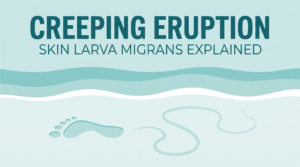
Walking barefoot on warm, sandy soil can expose the skin to hookworm larvae from animal waste. The result is a snaking, itchy rash known as creeping eruption. Scabies is another skin problem travelers can bring home, especially after sharing crowded accommodation. If you are curious how clinicians confirm it, see how scabies is diagnosed.
Silent infections that surface later
Strongyloides is the best-known example. It can persist for decades after exposure, then cause serious illness if the immune system is suppressed by steroids or transplant drugs. This is the reason some doctors suggest Strongyloides screening for people with relevant travel or residence history, even when they feel perfectly well.
Filarial infections
Infections spread by biting flies or mosquitoes, such as river blindness, lymphatic filariasis and loiasis, are mostly a concern for people who spent a long time in affected areas rather than short holidaymakers. They matter here because treatment choices can change depending on which infection is present. In parts of Central Africa, for example, loiasis testing may come before ivermectin is used.
What to Tell the Doctor
The single most useful thing you can bring is a clear travel story. Jot down notes before the visit so nothing slips your mind:
- Where you went: countries, regions, and whether you stayed in cities or rural areas
- When: departure and return dates, plus when symptoms began
- Activities: freshwater swimming, walking barefoot, camping, or eating street food
- Exposures: insect bites, animal contact, or sharing beds and towels
- Medicines and vaccines: everything you took before, during and after the trip
Mention any long-term conditions and any medicines you take regularly. Some combinations matter, so it helps to review drug interactions with a pharmacist before starting anything new.
How Testing Usually Works
There is no single test for every parasite. Your doctor may order stool samples, often collected on more than one day because some parasites shed unevenly. Blood tests can look for particular antibodies or a raised count of eosinophils, a type of white blood cell that often climbs with worm infections. Skin checks, scrapings or, for some infections, blood smears may also be used.
A normal result does not always close the case. Timing matters, and a repeat test or a referral to a travel medicine or infectious disease clinic can be sensible if symptoms continue.
Where Ivermectin Fits
Ivermectin is a prescription antiparasitic medicine. Official labeling lists it for strongyloidiasis of the intestinal tract and for onchocerciasis, and doctors also use it for other conditions such as scabies. It does not treat every parasite, and it is not the right choice for every traveler.
Dosing is weight-based and depends on the infection, so it must follow your doctor’s instructions and the official prescribing information. Taking leftover tablets, or buying a dose based on something you read online, can delay the correct diagnosis and may cause harm. Ivermectin is prescription medicine and should be used only as directed by a doctor.
Evidence for uses beyond the approved ones is limited, and ivermectin is not an approved treatment or preventive for COVID-19. If a medicine is recommended for a use you do not recognize, ask what the evidence is.
Practical Steps for Future Trips
- Visit a travel clinic four to six weeks before departure for advice tailored to your destination
- Choose bottled or properly treated water where local supplies are uncertain, and eat food that is freshly cooked and served hot
- Wear footwear on sand and soil, and avoid lying directly on beaches contaminated by animals
- Use insect repellent and bed nets where biting insects are common
- Wash hands often, especially before meals
Frequently Asked Questions
How long after travel can a parasitic infection show up?
Most appear within weeks, but some worms can stay silent for months or years. If you feel unwell long after a trip, still tell your doctor about your travel history.
Do I need testing if I feel fine?
Usually not after a short holiday. People who lived or worked for a long time in high-risk areas may be offered screening, so it is worth asking.
Can I treat myself with leftover ivermectin?
No. The right medicine depends on the exact infection, your weight, your other medicines and your health history. Self-treating can mask symptoms and delay proper care.
Which doctor should I see?
Start with your general practitioner. If the cause is unclear or symptoms persist, ask for a referral to a travel medicine or infectious disease specialist.
Will everyone I travelled with be infected?
Not necessarily. Exposure varies from person to person, but companions who shared the same food, water or activities may also want to mention their symptoms.
This article is for general education and is not medical advice. Ivermectin is a prescription medicine and should be used only as directed by a doctor.